The Agile Prime Model: From Validation to Reusable Capability
An Agile Prime runs shared validation missions, captures what works and builds a catalog of flight-proven capability for future missions.
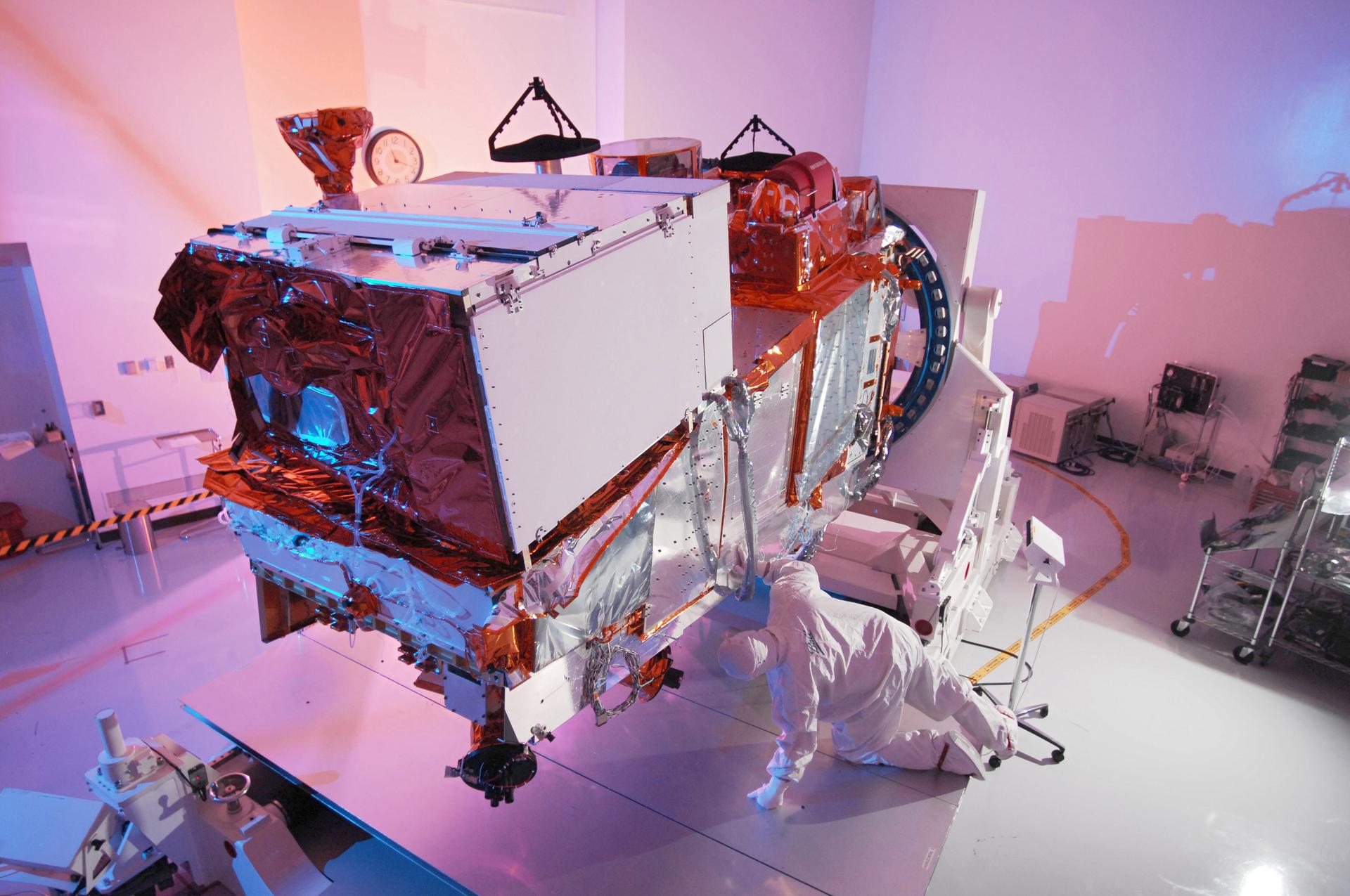
Most space technology companies should not have to become satellite companies before they can prove what they have built. A sensor, propulsion system, communications module or onboard application needs a relevant flight environment and a credible evidence package. It does not need another team to recreate every part of the mission around it.
SATELYX calls its operating model Agile Prime. An Agile Prime owns the mission outcome and brings several technologies into a shared validation mission. SATELYX manages the bus, integration, operations, data delivery and launch capacity, while each partner stays focused on its technology.
The model has three connected stages: validate, catalog and deploy.
Validate
Validation begins with a clear question. What does the technology need to prove, in which environment, and what evidence will a future customer or mission team need to see?
SATELYX factors each selected technology into a shared mission and defines its interfaces, operating plan, success criteria and evidence needs. The campaign records what happened in orbit, including performance, limitations and anomalies. Reaching orbit matters, but the useful result is traceable evidence tied to a controlled configuration.
Shared missions make this possible without forcing every participant to procure a complete satellite, ground segment and operations function for a single demonstration. Mission fit remains case by case because payloads do not share the same interfaces, risks or objectives.
Catalog
Successful validation turns technology into documented, reusable capability. The catalog records the flight configuration, interfaces, evidence, operating constraints and the conditions under which the result can support another mission.
The catalog is not a blanket claim that every future use is identical. A changed component, orbit, duty cycle, supplier or software version can require analysis or new testing. The catalog gives the next mission a known starting point instead of an empty page.
Customer payload data and customer intellectual property remain the customer’s. Rights to reuse a partner’s technology depend on the relevant agreement. SATELYX retains its own interface definitions, mission telemetry and integration know-how, which lets the mission platform improve without blurring those ownership boundaries.
Deploy
As the catalog grows, future missions can draw on capability that has already been exercised in orbit. A buyer still chooses against its requirements, and the mission team still checks the new environment, but the evidence and interfaces travel with the technology.
This is where the model compounds. Each mission adds more validated modules and more integration knowledge. Those modules can support turnkey capabilities for commercial and government customers, while repeated use expands the evidence behind them.
The SATELYX path
Mission 0 flew in Q4 2024. It gave the team technology-transfer experience and edge-compute experiments in orbit. SATELYX was not prime on that mission, so we do not present it as a SATELYX validation campaign.
VLEO Pathfinder, targeted for Q4 2027, is the first SATELYX-led catalog validation mission. It is a standardized, multi-payload mission built to validate selected technologies under defined objectives and turn successful results into catalog capability. Payload fit, interfaces and commercial terms are assessed individually.
IOD as a Service is the current commercial entry point. It establishes mission cadence, advances technologies through flight evidence and builds the reusable base for Capabilities on Demand. Intelligence on Demand is the longer-term horizon.
The principle is straightforward: prove the technology, preserve the evidence and deploy validated capability without rebuilding every mission from zero.
If your technology needs flight evidence, tell us what it needs to prove.
Read our guides to flight heritage and payload preparation.
Does Your Space Technology Need Flight Evidence?
Start with a mission-fit review for the software or hardware you need to prove in orbit.
Request a mission review