Flight Heritage: What It Means and How to Build It
Learn what flight heritage means, what evidence supports it, when it transfers to a new mission, and how IOD builds credible flight-proven capability.
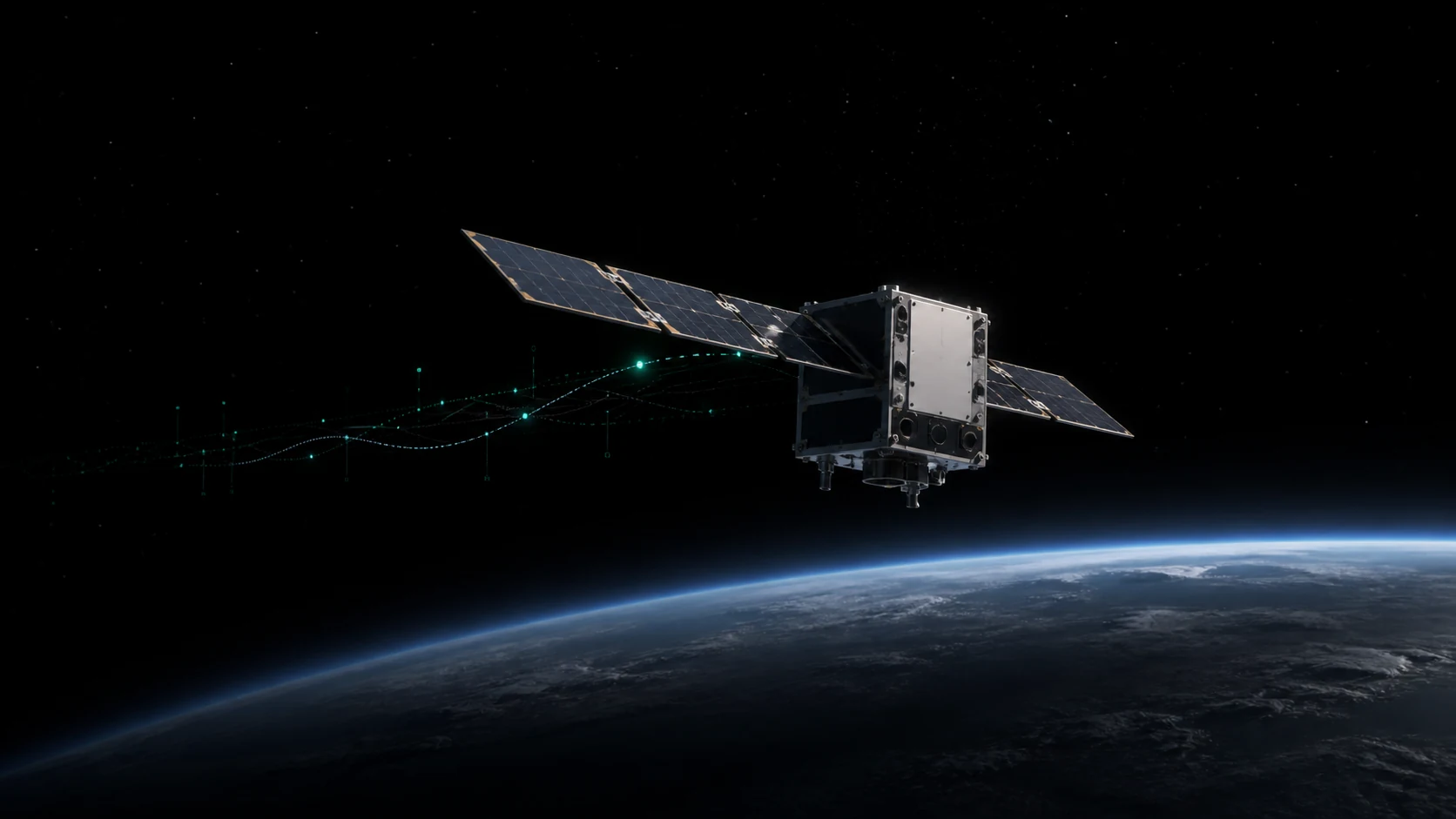
Flight heritage is traceable evidence that a defined technology configuration performed in a real flight environment. The useful version of the claim tells a reviewer what flew, where and for how long, what it was asked to do, what happened, and whether the same design can be produced again.
That last part matters. “It has flown” is a starting point, while a serious heritage assessment looks at configuration, environment, operations, manufacturing and evidence. A successful result in one orbit or mission does not automatically transfer to another.
For technology developers, flight heritage can reduce uncertainty in later engineering, procurement and investment decisions. Its strength comes from relevance and documentation, not from the phrase itself.
Flight Heritage at a Glance
| Heritage claim | What a reviewer needs to know |
|---|---|
| This design flew | Which design revision and software version? |
| It worked in space | Which functions ran, for how long and against what success criteria? |
| It is flight-proven | Was it used successfully in the intended operational role? |
| The next unit is the same | Are materials, suppliers, manufacturing and acceptance tests controlled? |
| It applies to our mission | Are the launch loads, orbit, radiation, thermal conditions and duty cycle comparable? |
The table is simple because the principle is simple: heritage belongs to evidence around a configuration, not to a product name in isolation.
What Flight Heritage Means
NASA’s review of flight-heritage practice says the term commonly refers to a successfully flown design or qualified hardware and software. The same report warns that heritage claims can create false confidence when teams do not re-evaluate the environment, application, implementation and lifetime for the new mission. The full NASA report documents failures where heritage was invoked without enough systems-engineering review.
A useful claim therefore includes:
- the exact hardware, firmware and software configuration;
- the manufacturing and acceptance history of the flight unit;
- the launch vehicle and mechanical environment;
- orbit, radiation, thermal exposure and mission duration;
- operational modes, duty cycle and interfaces;
- success criteria and measured results;
- anomalies, limitations, waivers and corrective actions;
- evidence that later units can reproduce the qualified design.
This definition covers physical components, complete subsystems and software. The evidence looks different for each, but the need for configuration and context stays the same.
Space-Qualified, Demonstrated and Flight-Proven
These terms describe different kinds of maturity and should not be treated as interchangeable.
Space-qualified
A space-qualified product has completed the agreed test and analysis programme for a defined environment and use. Qualification can provide strong evidence before flight, but it does not record actual in-orbit operation.
Demonstrated in space
The technology has operated in the flight environment and produced evidence against defined demonstration objectives. The result may cover a limited function, duration or set of conditions, so the claim should say what was demonstrated.
Flight-proven through mission operations
NASA’s Technology Readiness Level definitions place a prototype demonstrated in space at TRL 7, an actual system completed and flight-qualified at TRL 8, and an actual system proven through successful mission operations at TRL 9.
Reaching orbit does not assign a TRL by itself. The system boundary, intended application and evidence determine the assessment, and different organisations may tailor the scale for their own programmes.
Does One Flight Count?
One successful flight can create real and commercially useful evidence. It can show that a technology survived launch, communicated, operated in the target environment and produced the expected output.
Its scope remains limited to what happened on that mission. One flight cannot establish a statistical reliability record, and it may say little about a longer mission, a different orbit, a changed supplier or a new operating mode.
The honest claim is usually specific:
Configuration X completed function Y for duration Z in environment A, with results recorded in report B.
That is stronger than a broad statement because an engineer or buyer can examine it. Later flights can extend the evidence across duration, environments, production units and operational roles.
Why Context Changes the Answer
Heritage can lose relevance when a change affects the conditions that produced it. Reviewers commonly examine differences in:
- design revision, materials or component substitutions;
- manufacturing site, process, supplier or quality controls;
- firmware, software dependencies and operating system;
- mechanical mounting and structural load path;
- voltage, grounding, data interfaces and timing;
- thermal environment and heat-rejection path;
- radiation environment, shielding and mission duration;
- atmospheric exposure and contamination conditions;
- operating mode, duty cycle, autonomy and fault management;
- launch vehicle and qualification environment.
Not every difference forces a new flight. Some can be closed through similarity analysis, inspection, additional qualification or acceptance testing. Others change the use enough that a new demonstration is the clearest way to reduce uncertainty.
This is why good heritage work keeps the evidence package and configuration baseline together. Without both, the next programme cannot tell what it is inheriting.
What Buyers and Mission Teams Look For
Flight heritage is one input to a risk decision. Buyers still examine performance, interfaces, supply continuity, qualification, quality controls, mission fit and commercial terms.
ESA’s ATLAS programme exists because first-flight demonstration remains a barrier for new satellite communications products. ESA describes in-orbit demonstration as a way to help industry move new technology toward commercial adoption, particularly where operators need evidence from the real environment.
The same logic appears in ESA’s wider In-Orbit Demonstration activities: promising products often need independent flight opportunities because operational missions cannot carry every additional technology risk.
For a developer, the practical lesson is to design the evidence around the next decision. If the target buyer needs proof of performance over thermal cycles, collect and report it. If the concern is data integrity, radiation behaviour, autonomy or repeatability, build those questions into the campaign before launch.
How IOD Builds Flight Heritage
An in-orbit demonstration creates useful heritage when it connects a controlled configuration to relevant measurements. A strong campaign follows a clear chain:
- Define the adoption question. State what uncertainty prevents the technology from being selected or deployed.
- Set measurable success criteria. Decide which results answer that question.
- Choose a relevant environment. Match orbit, exposure, platform and operating conditions to the intended use as closely as practical.
- Control the flight configuration. Record hardware, software, interfaces and accepted changes.
- Operate and observe. Collect performance, health, environmental and anomaly data.
- Close the evidence. Produce a report that traces results back to objectives and requirements.
- Define the reuse boundary. State which future uses the evidence supports and which differences still need assessment.
ESA’s Technology Flight Opportunities framework describes this path from payload preparation and accommodation through integration, in-orbit operation and flight-data use. It notes that proposed technologies have typically reached at least TRL 5 or 6 and that the demonstration may support progression toward TRL 8 or 9, depending on the system and results.
An IOD mission does not create the same evidence for every payload. The campaign has to be designed around what each technology needs to prove.
What Belongs in a Flight-Heritage Package
There is no single universal certificate. A practical evidence package usually includes:
- configuration identification for the flight unit and software;
- requirements and demonstration objectives;
- qualification, acceptance and pre-flight test records;
- interface and operating documentation;
- mission timeline and relevant environmental context;
- command history, telemetry and performance data;
- calibration records and data-processing methods;
- anomaly log, investigation and corrective actions;
- results against each success criterion;
- limitations, open questions and recommended follow-on work;
- a statement of the configurations and uses for which the evidence is relevant.
The package should be usable by someone who was not in the mission team. If the result depends on an engineer remembering what happened, much of its value disappears during procurement or due diligence.
Flight Heritage for Software
Software can build flight evidence too, and the configuration boundary is just as important. Record the software version, model or algorithm, runtime, operating system, compute platform, dependencies, data inputs, resource use and update history.
An over-the-air update may preserve the flight-proven compute platform while changing the application being evaluated. The new software can inherit relevant platform evidence, but it still needs its own performance and operational results. This separation makes software validation useful without pretending that every update carries the same heritage as the code before it.
Building Reusable Capability
The strongest heritage strategy starts with the next use in mind. Choose success criteria that matter to future customers, preserve the data and configuration trail, and plan how the result will be assessed when the technology moves to another platform or mission.
Repeated use then builds on a controlled base. Each mission can add duration, environmental coverage, operating modes or production-unit evidence, while differences are handled openly through analysis and testing.
Where SATELYX Fits
SATELYX is an Agile Prime for responsive space: we factor space technology into shared validation missions, run the campaign around measurable objectives, and turn successful results into documented flight-proven capability with a path to reuse.
Our role covers the chain that makes the evidence useful: mission fit, interfaces, integration, operations, data collection and the post-flight package. Successful technology can enter the SATELYX catalog as a known capability when the relevant agreement provides the required reuse rights. Customer payload data and intellectual property remain subject to that agreement.
That is the meaning behind Prove once. Deploy everywhere. The proof travels with the configuration and evidence, while every future deployment still checks the differences that matter.
Read next: how IOD works, how to prepare an IOD payload, and the mission FAQ.
If your space technology needs credible flight evidence, request a mission review.
Frequently Asked Questions
What is flight heritage?
Does one successful flight count as flight heritage?
Is flight-proven the same as TRL 9?
Can flight heritage transfer to a different mission?
How does an IOD mission create flight heritage?
Does Your Space Technology Need Flight Evidence?
Start with a mission-fit review for the software or hardware you need to prove in orbit.
Request a mission review