What Does an In-Orbit Demonstration Mission Cost?
IOD cost depends on mission fit, interfaces, evidence, testing, operations and regulatory responsibilities, not payload mass alone.
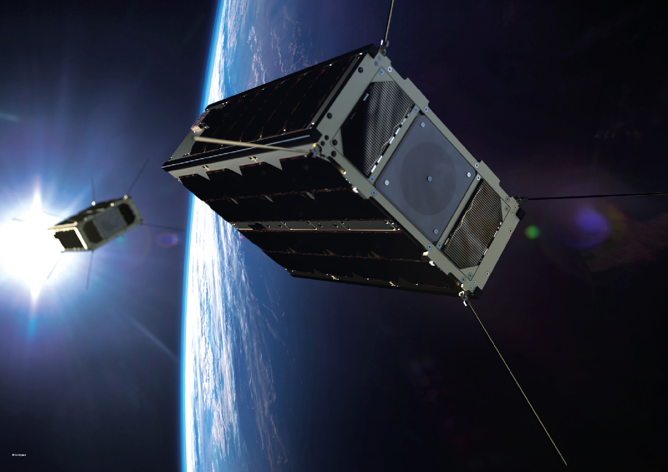
The cost of an in-orbit demonstration is not a launch price multiplied by payload mass. Launch capacity is one line in a larger mission that includes engineering, integration, verification, operations and evidence delivery.
Two payloads with the same mass can require very different work. One may be passive and self-contained. The other may transmit radio frequency, dissipate significant heat, need precise pointing or require frequent commanding and high-volume downlink. A useful estimate starts with the mission objective and current configuration.
The main cost drivers
Mission fit and interfaces
The mission team first has to understand the payload’s mechanical, electrical, thermal, data and operational interfaces. Mature interface data reduces uncertainty. Missing limits, changing configurations or unusual hazards add engineering and verification work.
The spacecraft may also need accommodation hardware, harnessing, software, thermal control or additional fault containment. These are integration costs, even when launch capacity itself is available.
Verification and test readiness
An IOD payload needs a mission-specific verification plan. Existing qualification and test evidence can reduce duplicated work when it is relevant to the actual flight configuration and environment.
Testing copied from a different mission does not automatically transfer. Launch loads, mounting, thermal paths, orbit, radiation, duty cycle and mission duration can create new gaps. A payload that is still changing may need more analysis, retesting and configuration control before it can be accepted.
Spacecraft resources
Mass and volume matter, but so do average and peak power, heat rejection, data generation, pointing, field of view and operating time. A payload that needs a short scheduled experiment uses the mission differently from one that runs continuously.
Resource demand should be discussed as a profile, not a single nominal number. Peaks, startup behaviour, safe states and fault cases often determine the real accommodation work.
Operations and data
The campaign must cover commissioning, commanding, monitoring, anomaly response, data downlink, processing and delivery. The cost depends on how often the payload operates, how much data it produces and how much specialist support it needs.
Evidence also has a cost. A credible post-flight package needs controlled configuration records, mission context, telemetry, results against success criteria and a clear account of anomalies and limitations.
Launch and schedule
Launch capacity depends on orbit, integration constraints, manifest availability and the date when the payload is genuinely ready. A nominally cheap launch slot can become expensive if the payload misses its interface or test deadline.
Schedule risk should be visible in the proposal. The important dates are not only launch date, but also design freeze, interface closure, test completion, delivery and regulatory filing deadlines.
Regulatory and commercial responsibilities
Licensing, spectrum, insurance, export control and launch procurement are not universal line items assigned to one party by default. Responsibility depends on the mission, payload, operating model and jurisdiction, and it must be set out in the contract.
A transmitting payload can create spectrum work of its own. Controlled technology may affect which information can be shared and where integration can happen. Raising these questions early protects both schedule and budget.
What a useful proposal should contain
A serious IOD proposal should make the scope legible. It should identify:
- the payload configuration and mission assumptions used for the estimate;
- the validation objectives and evidence to be delivered;
- the included engineering, accommodation and test activities;
- spacecraft resources and operating allocation;
- launch, ground and data responsibilities;
- regulatory, insurance and export-control responsibilities;
- customer dependencies, exclusions and change-control rules;
- schedule gates and the assumptions behind them.
Without this, a low headline price can move important work back to the payload team or leave it unowned.
Why SATELYX does not publish a universal price
SATELYX assesses mission fit case by case because the work must match the technology and the evidence it needs. We do not publish a kilogram price that implies every payload consumes the same engineering, mission resources or risk.
IOD as a Service gives the partner one managed mission path across integration, operations, data delivery and launch capacity. The payload still receives a defined scope, interfaces, responsibilities and evidence plan before a commercial commitment is made.
Successful validation turns the result into documented, flight-proven capability. Where the agreement provides the relevant rights, that capability can join the SATELYX catalog and support future missions without starting from zero.
For a mission-fit discussion, request a mission review.
Prepare for that discussion with our payload readiness guide.
Does Your Space Technology Need Flight Evidence?
Start with a mission-fit review for the software or hardware you need to prove in orbit.
Request a mission review