What Is In-Orbit Demonstration?
What in-orbit demonstration (IOD) means, how IOD and IOV differ, and how a controlled flight campaign creates credible evidence for space technology.
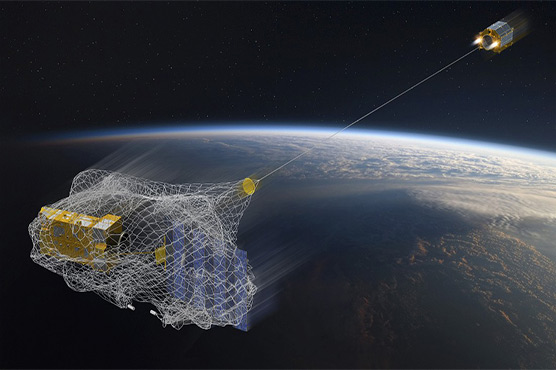
In-orbit demonstration, or IOD, is a flight campaign designed to answer a specific question about a technology in the real space environment. The technology might be hardware, software, a material, a sensor, a communications system or a complete subsystem.
The useful result is not simply that the technology reached orbit. A credible IOD records what flew, how it was operated, which environment it experienced, what the success criteria were and what the data showed.
The European Space Agency describes IOD as a route for promising technologies to gain flight opportunities and reduce the risk that keeps new products out of operational missions.
IOD and IOV
IOD is often used alongside IOV, meaning in-orbit validation. Organisations do not apply the terms in exactly the same way. A practical distinction is:
- demonstration asks whether a technology can perform a defined function in orbit;
- validation asks whether the evidence supports defined requirements for an intended use.
The mission contract and evidence plan matter more than the label. Two campaigns can both be called IOD while answering very different technical and commercial questions.
Technology readiness levels
Technology Readiness Levels provide one way to describe maturity. NASA’s TRL definitions place a prototype demonstrated in space at TRL 7, an actual system completed and flight-qualified at TRL 8, and a system proven through successful mission operations at TRL 9.
Reaching orbit does not automatically assign a TRL. The system boundary, intended use, mission duration and evidence determine what the campaign supports. A limited experiment can create valuable flight evidence without proving a complete operational system.
How an IOD campaign works
A strong campaign connects the next adoption decision to the mission design.
- Define the question. Identify the technical or commercial uncertainty blocking the next use.
- Control the configuration. Record the hardware, software, interfaces and accepted changes.
- Set measurable criteria. Decide what result counts as success and which data must be collected.
- Choose the environment. Match orbit, exposure, platform and operating conditions to the intended use.
- Integrate and verify. Close interfaces, safety, testing and operational readiness before flight.
- Operate and collect evidence. Record performance, health, environmental context and anomalies.
- Close the campaign. Report results, limitations and the boundary within which the evidence can be reused.
The process differs by payload. Software running on an existing compute platform has different interfaces and risks from a propulsion system or an exposed material sample.
What the mission provider handles
Responsibility depends on the mission and contract. A mission provider may manage the spacecraft bus, payload integration, launch capacity, ground operations and data delivery. Licensing, spectrum, insurance, export control and payload-specific approvals must still be allocated explicitly between the parties.
A serious proposal should say who is responsible for each activity, what assumptions the schedule depends on and which evidence the customer receives after the mission.
Cost and schedule
There is no responsible universal price or timeline for IOD. Payload mass and volume matter, but they are only part of the picture. Power, thermal rejection, data volume, RF activity, hazards, orbit, mission duration, test status, licensing and launch constraints can change the work substantially.
The right first step is a mission-fit assessment based on the current configuration and the evidence required. A quoted slot without that context can hide more cost and schedule risk than it removes.
Where SATELYX fits
IOD as a Service is SATELYX’s current commercial entry point. As an Agile Prime for responsive space, SATELYX factors selected technologies into shared missions and manages the mission around defined validation objectives.
Successful validation turns technology into documented, flight-proven capability. With the relevant reuse rights in place, that capability can join the SATELYX catalog for future missions. Customer payload data, customer intellectual property and rights to reuse partner technology remain governed by the relevant agreement.
See current shared IOD missions for the mission route, and use the mission FAQ for common questions about fit, integration, evidence and responsibilities.
If your technology needs flight evidence, request a mission review.
Continue with our guides to payload preparation and flight heritage.
Does Your Space Technology Need Flight Evidence?
Start with a mission-fit review for the software or hardware you need to prove in orbit.
Request a mission review